
Running a nursery or tree farm is physically demanding work. Whether you're hauling balled-and-burlapped trees across uneven ground, moving flats of annuals through a crowded greenhouse, or ferrying tools and supplies from one end of a large property to the other, the right utility vehicle can make a massive difference in how much your team gets done... and how worn out they are at the end of the day.
If you've been relying on wheelbarrows, forklifts, or just sheer muscle power to get things around your operation, it might be time to consider a dedicated utility cart. Here's what nursery and tree farm operators should know before they buy.
Why Utility Carts Are a Game-Changer for Green Industry Operations
Time is money on any farm, but on a nursery or tree farm, it's especially true. The growing season waits for no one, and inefficient material handling is one of the most common (and most fixable) drains on productivity.
A good utility cart lets you:
- Move more product in fewer trips. Instead of making five runs with a hand truck, you load up once and go.
- Protect your inventory. Trees, root balls, and potted plants are heavy and awkward. A stable, purpose-built cart reduces the risk of dropped or damaged stock.
- Reduce worker fatigue and injury. Repetitive heavy lifting is one of the leading causes of injury in agricultural and horticultural work. Getting that load off your team's backs (literally) keeps people healthier and on the job.
- Navigate terrain a standard vehicle can't. Nurseries and tree farms aren't flat, paved warehouses. You need something that handles soft ground, gravel paths, muddy rows, and tight spaces between benches or trees.
What to Look for in a Utility Cart for Your Nursery or Tree Farm
Not all utility carts are created equal. Here are the features that matter most for nursery and tree farm applications:
Load Capacity
Trees are heavy. A 3-inch caliper balled-and-burlapped tree can weigh several hundred pounds before you've added the cart, the tools, and anything else going along for the ride. Look for carts with a rated capacity that gives you comfortable headroom above your heaviest typical load, not just your average one.
Ground Clearance and Tire Type
Your terrain will largely determine what kind of tires and clearance you need. If you're working on loose soil, gravel, or grass, pneumatic (air-filled) tires provide much better traction and a smoother ride than solid rubber tires. Low ground pressure is also important so you're not tearing up your rows or compacting soil around your growing beds.
Turning Radius
Greenhouses and covered growing areas can be tight. A utility cart that needs a lot of room to turn around becomes a frustration fast. If you work in any kind of enclosed or densely planted space, prioritize carts with a tight turning radius.
Bed Size and Configuration
Think about what you're actually hauling. Flat nursery stock? You want a wide, flat deck. Potted trees? Side rails or stake pockets help keep things from shifting. Bags of soil or mulch? A dump bed can save enormous time and labor. Many operations find that a cart with a removable or adjustable bed configuration gives them the most flexibility across different jobs.
Electric vs. Gas
This one comes down to where and how you'll use it. Electric utility carts are quieter, produce no emissions (great for enclosed greenhouse use), and tend to have lower maintenance costs. Gas-powered carts offer more range and power for larger properties where you might be running all day far from a charging station. Many modern electric carts have ranges that work just fine for most nursery operations, just make sure charging access is convenient for your workflow.
Towing Capability
If you're pulling trailers, spray tanks, or other equipment around your property, pay close attention to tow ratings. A cart that can handle a loaded tree trailer is a very different machine from one that's just designed to carry a few flats of perennials.
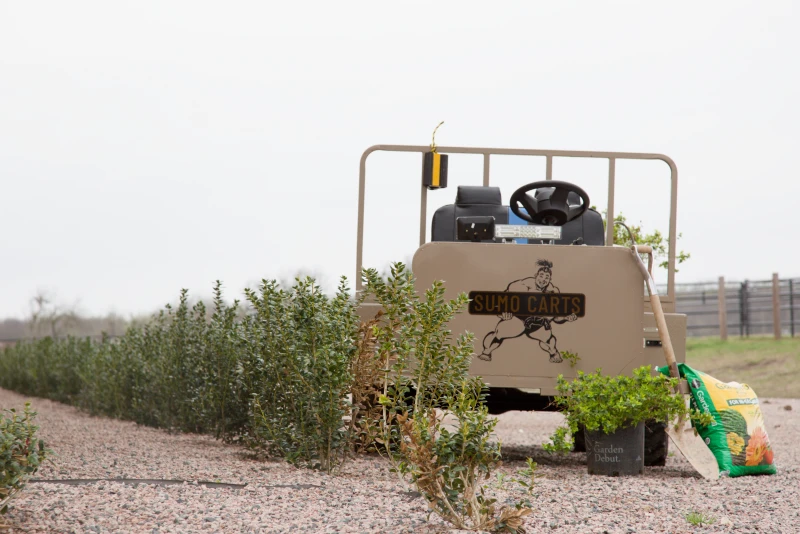
Common Ways Nurseries and Tree Farms Use Utility Carts
Every operation is a little different, but here are some of the most common ways utility carts get put to work in the green industry:
Field and Row Work
Moving trees from the growing field to a staging area, transporting irrigation equipment, or carrying pruning and spraying supplies down long rows, utility carts cut the back-and-forth dramatically and let workers stay focused on the task at hand.
Greenhouse and Hoop House Operations
Loading and unloading benches, moving propagation trays, hauling soil and amendments, greenhouse work involves a constant flow of materials in a confined space. A compact, maneuverable cart pays for itself quickly in labor savings.
Customer Pick-Up and Loading
When a customer buys a large tree or a pallet of shrubs, getting it to their vehicle efficiently reflects on your professionalism. A utility cart makes that process smooth and safe, especially for larger stock that would otherwise require multiple people and a lot of effort.
Maintenance and Grounds Work
Irrigation repairs, fertilizer applications, mowing supplies, hand tools, utility carts are also workhorses for the everyday maintenance tasks that keep a farm running.
Getting the Right Fit for Your Operation
Before you buy, it's worth taking a walk through your property with fresh eyes. Ask yourself:
- What are the heaviest loads I move regularly?
- What's the tightest space I need to navigate?
- How far do I need to travel on a typical run, and over what kind of terrain?
- Will this cart be used indoors, outdoors, or both?
- How many hours a day will it be running?
Answering these questions honestly will point you toward the right size, power source, and configuration, and help you avoid buying more (or less) cart than you actually need.
Ready to Find the Right Utility Cart for Your Nursery or Tree Farm?
Whether you're a small specialty grower or running a large wholesale tree farm operation, we've got carts that fits your workflow, your terrain, and your budget.